August 19, 2026
The Indianapolis Clowns Are Back: Banana Ball’s Most Historic Team
The Indianapolis Clowns are back, this time in Banana Ball. Inside the BBCL team roster, its Negro Leagues history and how to follow every game this season.
Five of the six teams in the Banana Ball Championship League were invented for the show. One of them was resurrected.
The Indianapolis Clowns are the most historically loaded name in Banana Ball — a barnstorming club that outlived every other team in the Negro Leagues, gave Hank Aaron his first professional contract, and put a woman on the field in 1953. Now the name is back on a BBCL scoreboard. Here's what the modern Clowns are, where the name comes from, and how to follow them.
Who are the Indianapolis Clowns in Banana Ball?
The Clowns are one of six teams in the Banana Ball Championship League, alongside the Savannah Bananas, the Party Animals, the Firefighters, the Texas Tailgaters and the Loco Beach Coconuts. You can see all six on the Banana Ball teams page, and the Clowns have their own team page with the current roster.
They came in as an expansion club for the league's first real season, with each BBCL team playing a 60-game slate. That's the piece that changed everything: Banana Ball used to be a tour with a couple of opponents. Now it's a league with a standings table, and the Clowns are in it.
The name is not a costume. Banana Ball partnered with the Negro Leagues Baseball Museum in Kansas City to bring the Clowns back and preserve the club's history rather than just borrow its logo.
The original Clowns were barnstorming royalty
The first version of this team started in 1930s Miami as the Ethiopian Clowns, moved to Cincinnati in 1943, and landed in Indianapolis shortly after. From there they became the longest-running franchise in Negro Leagues history — and the last Negro Leagues club standing, barnstorming across the country into the 1980s.
What made them famous was the formula: genuinely elite baseball wrapped in comedy routines, pregame bits and on-field showmanship. Sportswriters reached for the Harlem Globetrotters comparison constantly, and it fit. People came for the act and stayed because the players were terrific.
Three names tell you how serious the baseball was:
- Hank Aaron signed his first professional contract with the Clowns in 1952, before a big-league organization bought him and he went on to become baseball's home run king.
- Toni Stone joined the club in 1953 and became the first woman to play regularly on a major-level American professional baseball team. She also got a hit off Satchel Paige.
- Satchel Paige pitched for the Clowns himself in 1967, at age 60.
That's a first-ballot Hall of Famer, a barrier-breaker and one of the greatest pitchers who ever lived — all in the same uniform.
Why the Clowns fit Banana Ball perfectly
Banana Ball gets described as a gimmick by people who haven't watched it. It isn't a new idea so much as a very old one with a modern rulebook: a two-hour clock, a point for every inning won, no bunting, no stepping out of the box, and a fan catching a foul ball counting as an out. The whole design exists to keep the show moving and keep the crowd inside the game.
The Clowns were doing entertainment-first baseball eighty years earlier, out of necessity and by choice — traveling town to town, filling ballparks, making the game funny without making it soft. Putting that name back on a Banana Ball roster is less a reboot than a straight line.
Who plays for the Indianapolis Clowns?
The Clowns made the loudest move of the inaugural Banana Ball player draft: they took Jackie Bradley Jr. with the first overall pick. Bradley spent 11 seasons in the majors, won a World Series in 2018, and became the first former MLB player to commit to playing Banana Ball full time.
Beyond that, rosters in this league move. Players get traded, added and shuffled during the season in ways that would never happen in affiliated ball, so the honest answer to "who's on the Clowns right now" is always the live page rather than a list in an article. Check the Indianapolis Clowns roster for the current group, and the Banana Ball player stats page to see who's actually producing.
How to follow the Clowns this season
Four places do the job:
- The Banana Ball schedule — every BBCL game, including which city the Clowns are in next.
- Where to watch — streaming and broadcast options for Clowns games.
- Team stats and records — how the Clowns stack up against the other five clubs.
- Past games — final scores and results once a game wraps.
Because BBCL teams barnstorm rather than sit in one home ballpark, "when are the Clowns playing near me" is a schedule question, not a stadium question. The schedule page is the one to bookmark.
FAQ
Are the Banana Ball Indianapolis Clowns the same team as the Negro Leagues Clowns?
Not the same organization — the original club disbanded decades ago. The Banana Ball team is a revival of the name and legacy, done in partnership with the Negro Leagues Baseball Museum, which is involved specifically to preserve the history rather than let it become a costume.
Did Hank Aaron really play for the Indianapolis Clowns?
Yes. Aaron signed his first professional contract with the Clowns in 1952. He was sold to a major league organization that same year and never looked back.
How many teams are in the Banana Ball Championship League?
Six: the Savannah Bananas, Party Animals, Firefighters, Texas Tailgaters, Loco Beach Coconuts and Indianapolis Clowns. Each plays a 60-game schedule.
Who was the Clowns' first draft pick?
Jackie Bradley Jr., taken first overall in the inaugural Banana Ball draft. He's an 11-year MLB veteran and a 2018 World Series champion.
Where do the Indianapolis Clowns play their home games?
Like every Banana Ball team, the Clowns travel. Games land in different ballparks across the country rather than in one fixed home stadium, so the schedule is the only reliable way to find them.
Is Banana Ball real baseball?
Real enough that a World Series champion signed up to play it full time. The rules are different — the two-hour clock and the win-every-inning scoring change the strategy a lot — but the talent on the field is legitimate, which is exactly what the original Clowns were known for too.
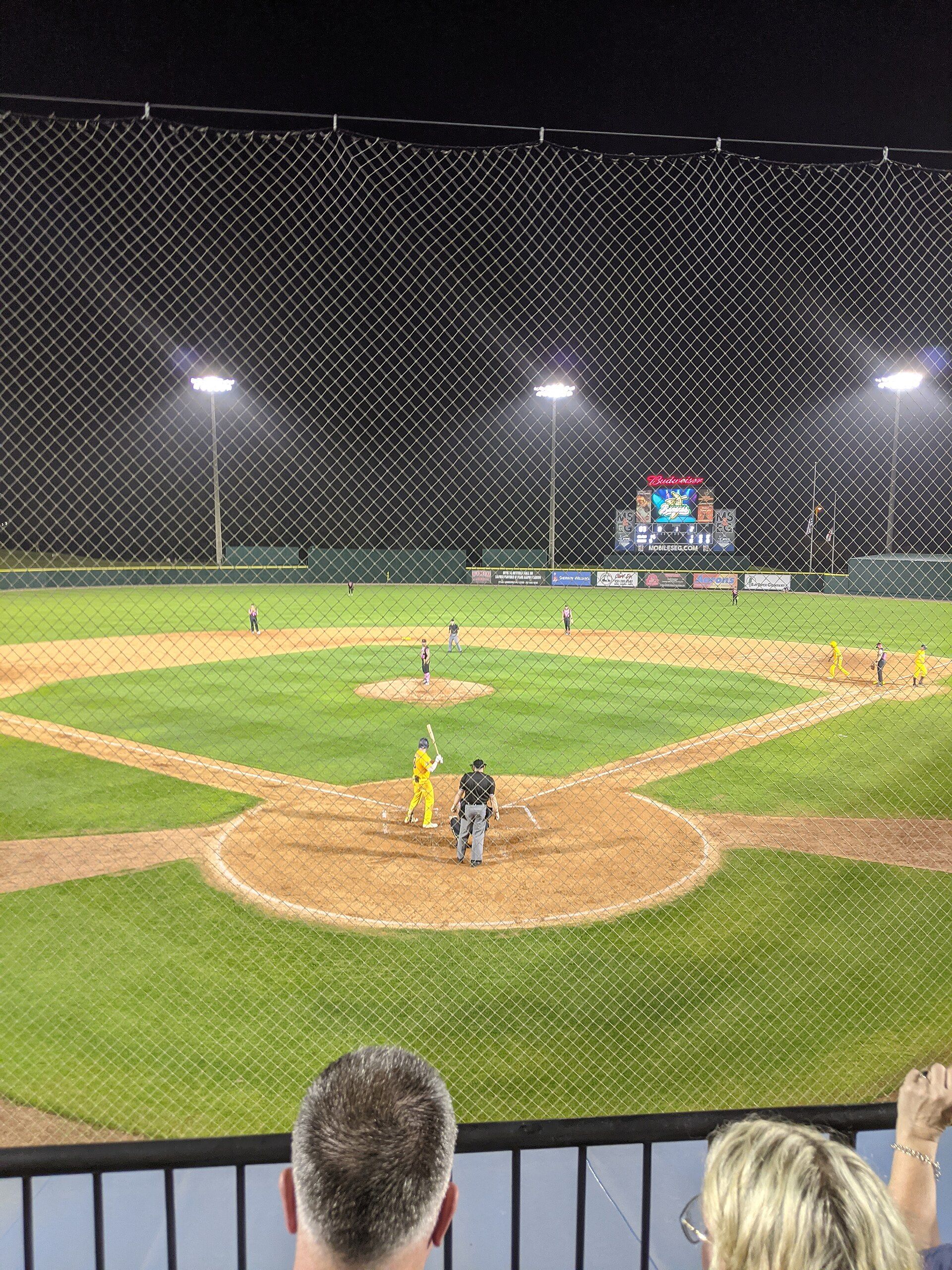
Photo: baseballmapper / Wikimedia Commons (CC0)
